
As the days grow shorter and the nights stretch themselves across the land, something ancient stirs in us.
Winter has always been the season of descent. Crops return to the soil. Trees go bare. Animals slow down. And humans, whether we realize it or not, are invited inward too.
This is why shadow work feels especially alive right now.
Shadow work isn’t about fixing yourself. It’s about recognizing, reclaiming, and integrating the parts of you that were exiled along the way. Not because they were wrong, but because they were inconvenient. Too emotional. Too loud. Too ambitious. Too sensitive. Too bright.
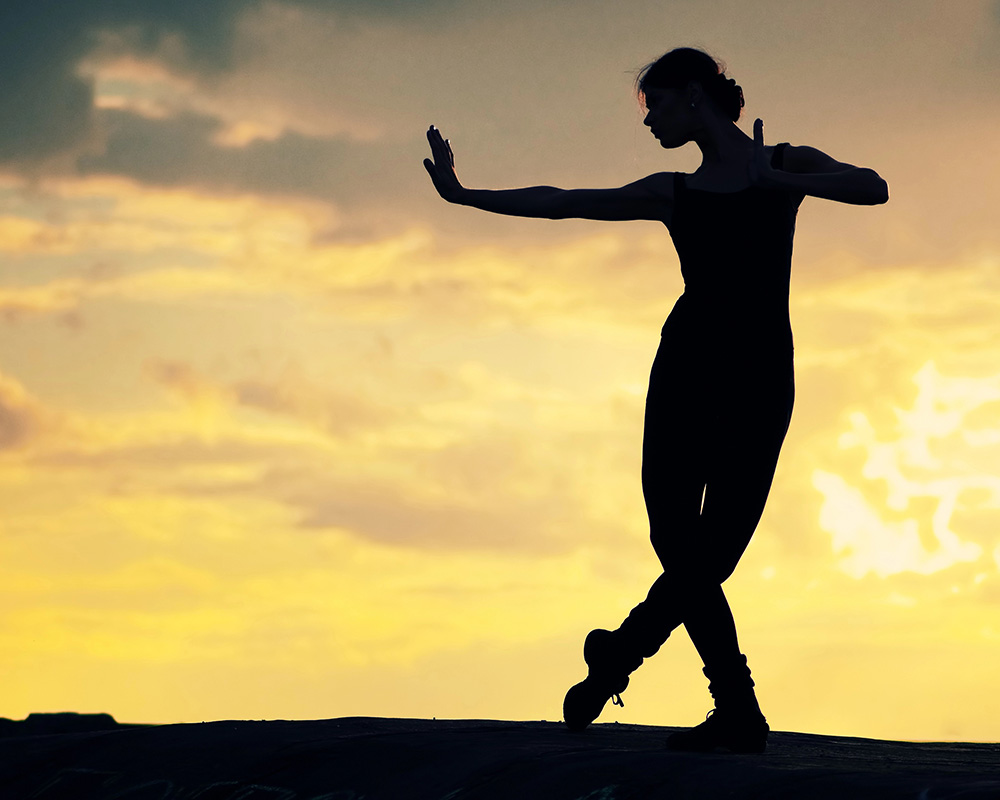
If you’re standing in the light at all, you’re going to cast a shadow. And as a photographer, I’ve learned something important about that: very often, the most interesting part of the story lives in the shadow.
Shadow Work Is Older Than Psychology
While Carl Jung gave us the modern psychological language for the shadow in the early 1900s, this work didn’t start there. Humans have been telling shadow stories for as long as we’ve been telling stories at all.
The ancient Greeks carved Know Thyself into the Temple of Apollo, and they didn’t mean “know your résumé.” They meant know the parts of yourself you’d rather not look at. They believed that ignoring your inner contradictions made you vulnerable to hubris, and hubris, to them, was the downfall of great humans.
In many Indigenous cultures, darkness isn’t feared. It’s respected. It’s the womb of the earth. The place of gestation. The quiet space where truth finally has room to speak.
Alchemy understood transformation as a process that begins in darkness. Before anything could become gold, it had to pass through a stage of breakdown and dissolution. Nothing new could be born without that moment of falling apart.
And in Celtic lore, figures like the Morrígan appear not as punishment, but as mirrors. She reflects back sovereignty, power, and rage, especially the forms of power we’re afraid to claim. When people encountered her, they weren’t meeting doom. They were meeting their own underestimated strength.
Across cultures, the shadow appears as an underworld, a trickster, a double, or a threshold guardian. Different names. Same invitation.
The Many Faces of Shadow
Not all shadows look the same.
Some are repressed shadows, traits we learned early on were unacceptable. Anger. Sensitivity. Desire. Creativity. Ambition. Especially for women, these qualities often got labeled as problems long before we had language for them.
Some are projected shadows, the traits we refuse to see in ourselves and instead assign to others. This is where many of our “isms” live. Racism, sexism, ableism. Projection lets us avoid the discomfort of looking in the mirror.
Then there’s the golden shadow, which surprises most people. These are the gifts we exiled. Our brilliance. Our voice. Our visibility. Our power. Often hidden because shining came with consequences.
There are also ancestral shadows, patterns that traveled down our lineage long before we were born. Beliefs about worth, safety, legitimacy, rest, and survival that didn’t start with us, but still live in our nervous systems.
And finally, collective shadows, the beliefs a culture quietly agrees not to question. Like the idea that rest is lazy. Or that stillness is unproductive. Or that power, especially feminine power, is something to be feared.
Shadow work asks us to notice where these patterns live in us and gently bring them back into the circle.
Why Winter Is the Perfect Time
Nature models shadow work every year.
Nothing is rushing right now. Nothing is blooming on demand. The land is conserving energy, storing nutrients, preparing quietly for what comes next.
Our culture often pushes against this rhythm. We’re told to be busier than ever during a season that naturally wants us to slow down. But when we ignore the invitation of winter, we lose touch with something essential.
Shadow work is winter work.
It’s not loud. It’s not performative. It doesn’t demand answers on a timeline. It simply asks us to sit long enough to hear what’s been whispering all along.
A Gentle Way In: The Golden Shadow Reflection
One of the simplest ways to begin is through reflection, literally.
The Golden Shadow Reflection Practice invites you to look at yourself not to find flaws, but to notice brilliance. To soften your gaze. To ask a single question: What brilliance in me have I been afraid to own?
You don’t have to believe the answer right away. You only have to let it speak.
Shadow work doesn’t demand perfection. It asks for presence. And when we befriend the parts we’ve exiled, something subtle but powerful happens. We become more grounded. More fluid. More coherent. More whole.
The shadows stop standing in front of us, pushing back.
They start walking beside us.